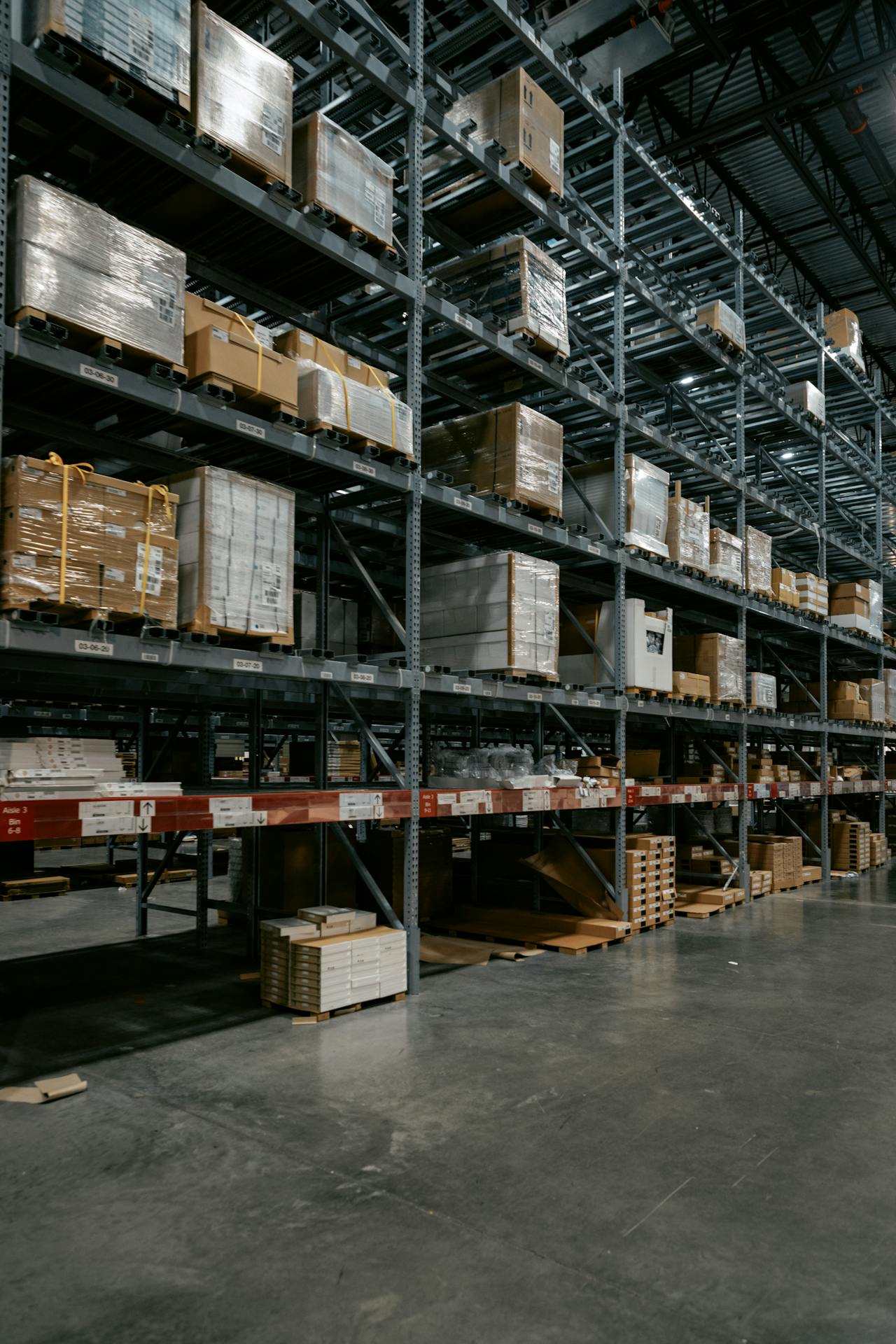
Emanate AI is an autonomous revenue engine for industrial materials companies, deploying AI agents that handle inbound conversion, customer nurturing, and prospect research across a $5 trillion market that still largely operates on phone calls, spreadsheets, and relationship-based selling. Backed by Andreessen Horowitz’s American Dynamism fund and Peter Thiel, the San Francisco startup emerged from stealth in February 2026 with a bold claim: its agents can boost customer revenue by 60% to 80%.
That number would be absurd in SaaS sales. In industrial distribution, where a single rep might manage 200 accounts and miss half the inbound requests because they were on the phone with someone else, it starts to make sense.
Why Industrial Materials Is the Biggest Untapped Market for AI Sales Agents
The AI sales agent space has exploded in B2B SaaS. Companies like 11x, Artisan, and AiSDR have raised hundreds of millions to automate outbound prospecting for software companies. But they all target the same pool: tech companies selling to other tech companies, where the buyer already expects a digital sales process.
Industrial materials is a fundamentally different beast. A steel distributor does not sell through inbound marketing funnels. Their customers call in with specs, ask for quotes on 50,000 pounds of carbon steel, need delivery coordinated with construction schedules, and often work with the same rep for decades. The sales cycle involves technical specifications, inventory checks, logistics coordination, and pricing that changes daily based on commodity markets.
This is exactly the kind of complexity that makes most AI agent deployments struggle in physical industries. The data is messy, the workflows are non-standard, and the domain knowledge runs deep. A generic AI SDR trained on SaaS email patterns would be useless here.
The $5 Trillion Opportunity
The industrial materials sector includes metals distributors, chemical suppliers, building materials companies, and industrial service centers. According to Fortune, these businesses collectively represent a $5 trillion market in the United States alone. Most of them run sales operations that have not fundamentally changed since the 1990s: reps take calls, check inventory in an ERP system, put together quotes manually, and follow up when they remember to.
The gap between how these companies sell and how they could sell is enormous. A distributor with 500 active accounts might only proactively engage 50 of them in any given quarter. The rest get attention only when they call in. That is not a strategy; that is triage.
How Emanate’s Autonomous Revenue Agents Actually Work
Emanate is not another chatbot bolted onto a CRM. The company describes its product as a “network of autonomous AI agents” that handle revenue operations end-to-end. Based on what has been publicly disclosed, the system works across three core functions.
Inbound Demand Conversion
The agents handle incoming requests 24/7 across channels: phone, email, web forms, and text. When a customer calls at 2 AM asking about availability on a specific alloy grade, the agent can check inventory, pull up the customer’s pricing history, and provide a quote. No wait times, no callbacks the next morning.
This matters because industrial buyers often work on tight timelines. A contractor who needs 10 tons of rebar delivered by Thursday is not going to wait for your sales team to get back from lunch. They will call your competitor.
Customer Relationship Nurturing
Rather than waiting for existing customers to reorder, the agents proactively reach out based on purchase patterns. If a customer typically orders coated steel every 6 weeks and it has been 5 weeks since their last order, the agent initiates contact. This is something most industrial distributors know they should do but rarely have the bandwidth for.
Prospect Research and Outreach
The agents scour web and industry databases to identify new potential customers, then reach out with relevant context. Not generic outreach, but messages that reference the prospect’s specific industry, recent projects, or procurement patterns.
The Team and the Backers
Emanate’s founder Kiara Nirghin is a Thiel Fellow, Stanford AI researcher, and former Google Science Fair Grand Prize winner. She is also the youngest board member of the Google Impact Fund. The team is deliberately small: fewer than 10 AI engineers and product designers.
The investor list reads like a who’s who of contrarian tech bets. Peter Thiel, who famously backs companies targeting markets others consider boring or unfashionable. Alexis Ohanian, Reddit’s cofounder. And Andreessen Horowitz through its $1.1 billion American Dynamism fund, which specifically backs companies building in sectors like energy, defense, and industrial infrastructure.
a16z’s thesis here is worth noting: they believe the “biggest remaining AI upside” lies not in software, but in sectors like energy and industrial distribution. That is a direct bet against the consensus that AI’s value concentrates in digital-native industries.
Why the Small Team Matters
Emanate’s sub-10-person team is not a limitation; it is a signal. The company is building AI agents that replace human labor in revenue operations, so running lean is both a proof of concept and a competitive advantage. If they needed 50 people to build an AI that replaces 5 sales reps, the economics would not work. The fact that a handful of engineers can build agents serving multiple industrial distributors simultaneously validates the approach.
What Makes This Different from AI SDR Tools
The AI SDR space is crowded. So why does Emanate matter?
Three reasons:
Domain specificity. Most AI sales agents are horizontal tools designed for SaaS outbound. Emanate is vertical, built specifically for industrial materials. That means understanding commodity pricing, technical specifications, logistics constraints, and the relationship-heavy nature of industrial sales. A general-purpose AI SDR cannot look up whether you have 316L stainless steel in 4-inch diameter bar stock at your Houston warehouse.
Full-cycle vs. top-of-funnel. AI SDR tools like 11x and Artisan focus on prospecting and booking meetings. Emanate handles the entire revenue cycle: inbound conversion, existing customer management, and new business development. That is a much harder problem but also a much bigger value proposition.
Physical economy focus. This is an AI agent entering the physical economy, not just moving data between software tools. The agents need to understand real-world constraints: lead times, shipping logistics, material certifications, weather impacts on delivery schedules. This is where most AI agent startups fail because the training data for these domains barely exists in structured form.
The Risks Nobody Is Talking About
The 60-80% revenue increase claim deserves scrutiny. Emanate’s product is in early deployment, and those numbers likely come from a handful of design partners, not thousands of customers. Early adopters of any AI tool tend to be the most tech-forward companies in their sector, which means they are already better at sales than the median industrial distributor. Selection bias is real.
There are other risks worth watching:
Relationship disruption. Industrial sales is relationship-driven. A customer who has worked with the same rep for 15 years might not appreciate getting a follow-up from an AI agent, no matter how well-crafted the message is. The transition has to be managed carefully.
Data quality. Industrial companies are not exactly known for pristine CRM data. If a distributor’s customer records are scattered across an ERP from 2008, Excel spreadsheets, and individual reps’ heads, the AI agents will struggle to deliver on their promise.
Pricing complexity. Industrial pricing is often negotiated per-customer and per-order, with volume discounts, long-term contracts, and commodity-linked price adjustments. Getting an AI agent to handle pricing without either leaving money on the table or quoting prices that lose deals is a hard problem.
What This Signals for the AI Agent Market
Emanate represents a broader shift: AI agents moving from digital workflows to physical industries. The first wave of AI agents automated email, calendar management, and software workflows. The next wave is going after industries where the work involves atoms, not just bits: manufacturing, logistics, energy, agriculture.
For companies in the industrial sector watching from the sidelines, the message is clear. The question is not whether AI agents will handle your sales operations. The question is whether your competitor deploys them first.
Frequently Asked Questions
What is Emanate AI?
Emanate AI is an autonomous revenue engine for industrial materials companies. It deploys AI agents that handle inbound demand conversion, customer relationship nurturing, and prospect research across the $5 trillion industrial materials market. The company emerged from stealth in February 2026, backed by a16z and Peter Thiel.
How do autonomous revenue agents work?
Emanate’s agents operate across three functions: converting inbound demand 24/7 across phone, email, and web channels; proactively nurturing existing customer relationships based on purchase patterns; and researching and reaching out to new prospects using industry-specific context.
Who founded Emanate AI and who are its investors?
Emanate was founded by Kiara Nirghin, a Thiel Fellow and Stanford AI researcher who won the Google Science Fair Grand Prize. The company is backed by Andreessen Horowitz through its $1.1 billion American Dynamism fund, Peter Thiel, and Reddit cofounder Alexis Ohanian.
How is Emanate AI different from AI SDR tools like 11x or Artisan?
Unlike horizontal AI SDR tools built for SaaS outbound, Emanate is vertical, built specifically for industrial materials. It handles the full revenue cycle rather than just top-of-funnel prospecting. It also operates in the physical economy, understanding commodity pricing, logistics, and material specifications.
What revenue improvements does Emanate AI claim?
Emanate claims its autonomous revenue agents can increase customer revenue by 60% to 80%. However, these figures come from early design partnerships with tech-forward industrial companies and should be evaluated with that context in mind.